
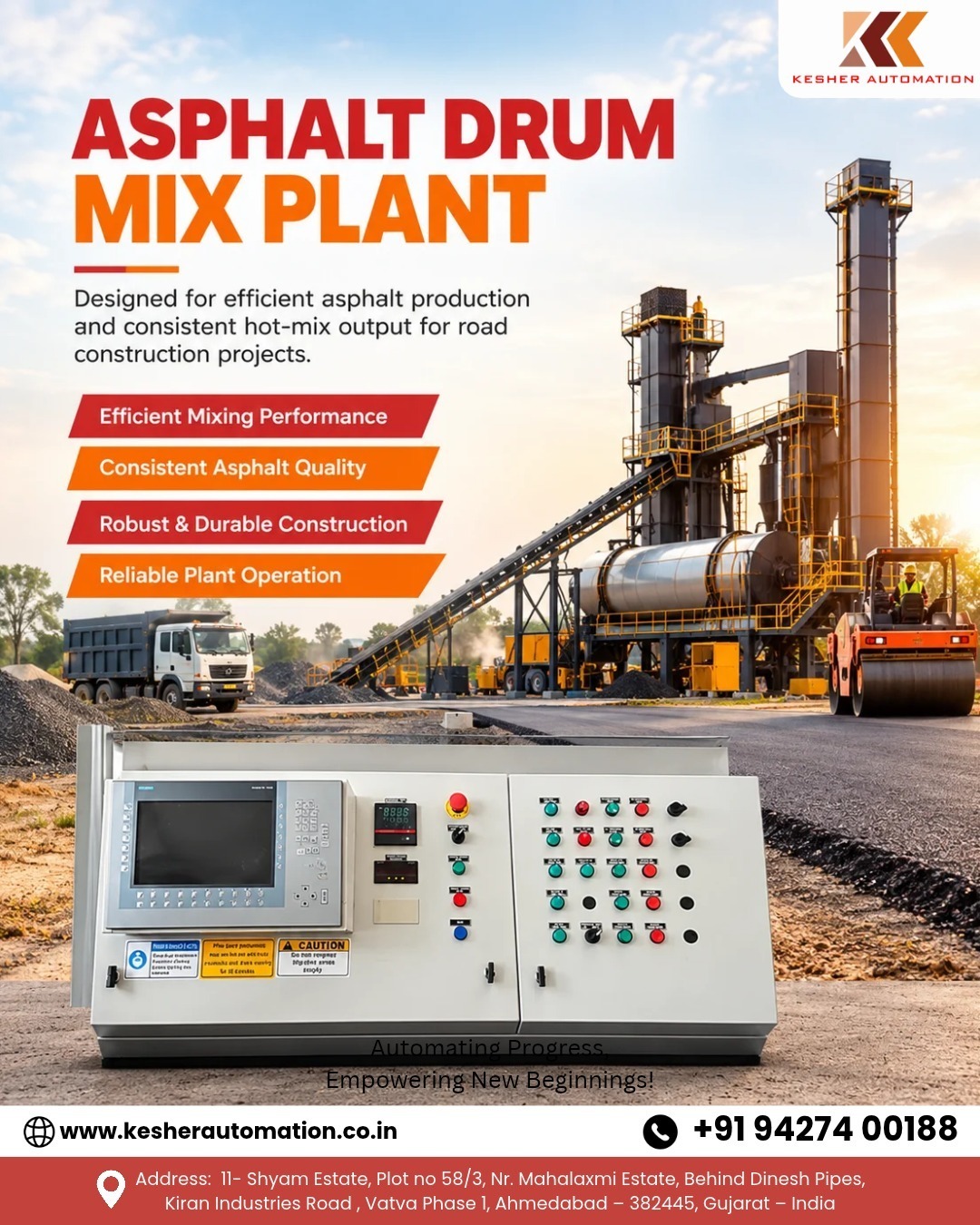
Successful road building depends on dependable equipment, high-quality materials, and efficient asphalt mixture production. An Asphalt Drum Mix Plant is essential equipment that combines heated aggregates with bitumen to produce hot-mix asphalt for road construction and resurfacing projects.
Designed for continuous production, this plant helps contractors maintain a steady asphalt supply, improve productivity, and manage production costs. Choosing the right equipment from a reliable Asphalt Drum Mix Plant Manufacturer in Ahmedabad can help construction businesses meet project requirements while maintaining consistent output.
Kesher Automation provides industrial automation solutions for businesses seeking dependable equipment and efficient plant operations. Understanding how it works, its components, applications, and selection criteria helps buyers make informed investment decisions.
What Is an Asphalt Drum Mix Plant
An Asphalt Drum Mix Plant produces hot-mix asphalt through a continuous manufacturing process. It heats and dries aggregates, then mixes them with bitumen in a drum to create a uniform road-surfacing material.
The plant typically includes aggregate-feeding equipment, conveyors, a drying and mixing drum, a burner system, a bitumen supply unit, dust-collection equipment, and a control panel.
A properly configured plant supports continuous material processing and helps road construction contractors manage their asphalt production requirements efficiently.
How Does an Asphalt Drum Mix Plant Improve Road Construction Efficiency?
1. Supports Continuous Asphalt Production
A key advantage of an Asphalt Drum Mix Plant is its ability to produce asphalt continuously, helping maintain steady output and improve overall operational efficiency. The plant feeds aggregates into the system, heats them, dries them, and mixes them with bitumen as it operates.
This process helps maintain a steady supply of hot-mix asphalt, making it suitable for highway construction, road resurfacing, and large infrastructure projects. Properly sized and operated plants can also reduce interruptions through continuous production.
2. Helps Maintain Consistent Asphalt Quality
Asphalt quality directly affects road performance and durability. Consistent aggregate feeding, suitable heating temperatures, and controlled bitumen addition help produce a uniform mixture.
A well-maintained plant supports better control over the production process, helping contractors meet the required mix specifications for different road applications.
3. Improves Operational Productivity
Modern plant configurations may include automated control systems that help operators monitor feeding rates, burner performance, drum operation, and bitumen flow.
These functions streamline plant management, reduce manual intervention, and improve coordination between asphalt manufacturing and road-laying operations.
When choosing an Asphalt Drum Mix Plant Supplier in Gujarat, businesses should assess the plant’s automation capabilities and control systems to find equipment that suits their production requirements.
4. Helps Control Fuel Consumption and Operating Costs
Heating and drying aggregates require energy, making fuel efficiency an important consideration. Optimizing burner settings, maintaining equipment routinely, controlling aggregate moisture, and ensuring proper insulation can reduce unnecessary energy consumption and improve overall plant efficiency.
Selecting a plant that matches the project's production requirements can also help prevent inefficient operation and unnecessary operating expenses.
5. Reduces Delays During Road Construction
Road paving operations require a timely supply of hot asphalt. Consistent production lets paving crews work on schedule and reduces unnecessary waiting time.
An appropriately selected Asphalt Drum Mix Plant for Road Construction supports smoother project coordination, especially for highways, industrial roads, urban streets, and large-scale infrastructure developments.
6. Simplifies Routine Maintenance
Reliable components and accessible service points can make routine inspections and maintenance easier. Regular checks of burners, conveyors, bearings, electrical systems, and dust collection equipment help identify potential problems before they cause major interruptions.
Contractors should also consider spare-parts availability, technical assistance, and operator training when purchasing an asphalt plant.
Key Components of an Asphalt Drum Mix Plant
Understanding the main components helps buyers evaluate plant functionality and suitability.
* Cold Aggregate Feeder: Supplies aggregates in the required proportions.
* Conveyor System: Transfers aggregates between processing stages.
* Drying and Mixing Drum: Removes moisture from aggregates, heats them to the required temperature, and combines them with bitumen to produce a consistent asphalt mix.
* Burner System: Provides the heat required to process aggregates.
* Bitumen Supply System: Stores, heats, and delivers bitumen to the mixing process.
* Dust Collection System: Captures dust generated during production and helps control emissions.
* Control Panel: Allows operators to monitor and manage plant functions.
The exact configuration depends on the plant model, production capacity, and project specifications.
Major Applications of an Asphalt Drum Mix Plant
An Asphalt Drum Mix Plant supports a wide range of road-building and infrastructure projects, such as:
* Highway and expressway construction
* Urban road development and resurfacing
* Rural road construction
* Industrial roads and factory access routes
* Commercial parking areas
* Road maintenance and rehabilitation projects
* Airport pavement projects where the equipment and asphalt mix meet applicable specifications
Required plant capacity and mix design depend on project size, material needs, and local construction standards.
How to Choose the Right Asphalt Drum Mix Plant
Selecting suitable equipment is key to reliable production and controlling long-term costs. Consider the following factors before purchasing.
Production Capacity
Choose a plant with a production capacity that matches the expected asphalt demand and project schedule. Consider both peak requirements and typical daily production.
Fuel Efficiency
Evaluate burner performance, aggregate moisture conditions, insulation, and expected energy consumption to understand the plant's operating requirements.
Mixing Performance
Check whether the plant can maintain adequate aggregate heating, dose bitumen accurately, and keep material proportions consistent.
Automation and Controls
Review the control panel, monitoring features, and available automation options to determine how easily operators can manage production.
Environmental Considerations
Assess dust collection equipment and applicable emissions and environmental requirements before installation and operation.
Maintenance and After-Sales Support
When comparing suppliers, consider service availability, spare parts, installation assistance, operator training, and warranty terms.
Total Cost of Ownership
Compare the initial purchase price with expected fuel consumption, maintenance, labor, transportation, and other operating costs. This approach provides a clearer picture of the investment over time.
Why Choose Kesher Automation for Asphalt Plant Solutions
Kesher Automation focuses on industrial automation solutions designed to support reliable equipment operation and process control. When evaluating an asphalt plant solution, buyers should review specifications, automation capabilities, production requirements, and technical support to find the best fit for theirprojects.
If you are searching for an Asphalt Drum Mix Plant Manufacturer in Ahmedabad, compare equipment features, operational requirements, and support services before making a final decision.
Contractors looking for an Asphalt Drum Mix Plant Supplier in Gujarat or an Asphalt Drum Mix Plant Distributor in India should also evaluate installation assistance, component availability, and long-term service arrangements.
To discuss your requirements, contact Kesher Automation through its official website or telephone number.
Frequently Asked Questions (FAQs)
1. What is an Asphalt Drum Mix Plant used for?
An Asphalt Drum Mix Plant produces hot-mix asphalt by heating and drying aggregates and combining them with bitumen. The finished mixture is used for road construction, resurfacing, and other suitable paving applications.
2. How does an Asphalt Drum Mix Plant improve road construction efficiency?
It supports continuous production, consistent material mixing, efficient process control, and a steady asphalt supply for paving operations. These benefits can help reduce avoidable delays and improve project coordination.
3. What materials are used in an Asphalt Drum Mix Plant?
Common materials include mineral aggregates, sand, bitumen, and, when the approved asphalt mix design requires it, mineral filler.
Keywords